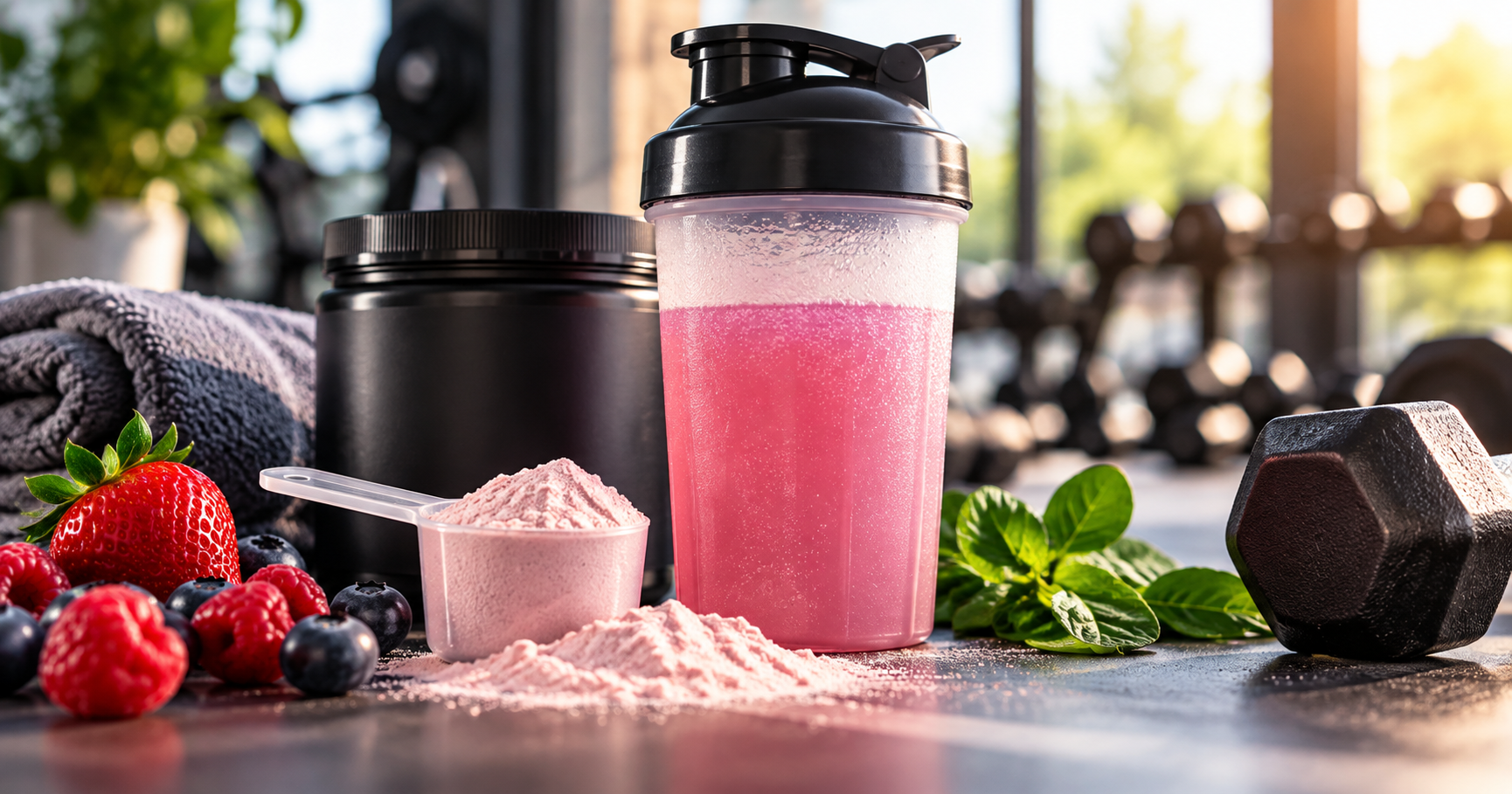
What Is Pre-Workout and What Does It Do?

What Is Pre-Workout and What Does It Do?
Walk into a gym or scroll through fitness videos online and it probably won’t be long before someone mentions pre-workout.
You’ll see tubs of colourful powders promising everything from increased energy to better workouts.
But what exactly is pre-workout, what’s usually inside it, and do you actually need it?
Let’s make it simple.
What Is Pre-Workout?
A pre-workout is a type of supplement designed to be taken before exercise.
You’ll most commonly find it as a powder that you mix with water, although pre-workout products can also come in other forms.
Unlike a vitamin containing one particular nutrient, many pre-workout products combine several different ingredients.
The exact formula can vary considerably from one product to another, which is why it’s worth looking beyond the advertising on the front of the tub and reading the actual ingredient information.
What’s Usually in a Pre-Workout?
There isn’t one standard pre-workout formula.
Different manufacturers use different combinations and quantities of ingredients.
Some of the ingredients you may come across include:
Caffeine
Caffeine is one of the most common ingredients in pre-workout products.
It’s a stimulant also naturally found in coffee and tea.
Research suggests caffeine can improve certain aspects of exercise performance for some people, particularly endurance-type activities, although individual responses vary.
Caffeine isn’t necessarily better simply because there’s more of it.
Higher intakes can increase the likelihood of unwanted effects such as difficulty sleeping, restlessness and feeling jittery.
That’s particularly worth remembering if you’re already drinking coffee, tea or other caffeinated drinks during the day.
Beta-Alanine
Beta-alanine is another ingredient commonly found in some pre-workout formulations.
One thing people sometimes notice after consuming beta-alanine is a temporary tingling sensation on the skin.
That sensation can feel unusual if you aren’t expecting it.
Creatine
Some pre-workouts contain creatine, although plenty don’t.
Creatine is also widely available as a standalone sports supplement.
So if you’re already taking creatine separately, check your pre-workout label rather than assuming you need another source.
Amino Acids
You may also see different amino acids listed.
However, simply having a long list of impressive-sounding ingredients doesn’t automatically make one pre-workout better than another.
This is why I prefer looking at what’s actually in a product and how much it contains rather than counting the number of ingredients printed on the label.
Does Pre-Workout Give You Energy?
This needs a little clarification.
When people describe the feeling of getting “energy” from a pre-workout, they’re often talking about the effects of stimulants such as caffeine rather than the product magically creating energy.
Caffeine affects the central nervous system and can reduce feelings of fatigue and perceived exertion for some people.
Research has found that caffeine can improve certain types of exercise performance, but results vary between individuals.
That distinction matters.
A supplement isn’t a substitute for sleep, food, hydration or an appropriate training programme.
When Do People Take Pre-Workout?
As the name suggests, pre-workout products are generally consumed before exercising.
Exactly when depends on the product and its ingredients, so always follow the manufacturer’s directions rather than assuming every pre-workout should be taken in exactly the same way.
Caffeine is absorbed relatively quickly, which is one reason caffeinated products are often consumed before training.
But timing also matters later in the day.
Caffeine has a half-life of several hours, so taking a caffeinated pre-workout during an evening workout could potentially interfere with sleep for some people.
That’s something that’s surprisingly easy to overlook.
Do You Need a Pre-Workout?
No.
You don’t need a pre-workout supplement in order to exercise.
A balanced diet, appropriate hydration, adequate sleep and a sensible exercise programme are much more fundamental.
Some people enjoy using pre-workout products.
Others prefer a coffee.
And plenty of people train perfectly happily without either.
The useful question isn’t:
“Do I need pre-workout?”
It’s:
“What am I hoping this product will do for me?”
Once you know that, you can look at the ingredients and decide whether the product actually makes sense for you.
5 Things I’d Check Before Buying a Pre-Workout
Here’s my simple checklist.
1. Check the caffeine content
Remember to consider caffeine you’re consuming from other sources too.
2. Read the complete ingredient list
Don’t make your decision based purely on the claims on the front of the packaging.
3. Check the serving size
One scoop isn’t necessarily the same across different products.
4. Consider when you exercise
A heavily caffeinated product may not be ideal if you’re training close to bedtime.
5. Ask whether you actually need everything in it
More ingredients don’t automatically mean a better product.
What About “Natural” Pre-Workouts?
You’ll increasingly see products marketed around plant-based or naturally sourced ingredients.
That’s an interesting part of the market and something we’ll be investigating here on Emma Hart Wellness.
But remember:
“Natural” doesn’t automatically mean that a product is suitable for everyone.
Look at the actual ingredients and quantities rather than relying on one word on the packaging.
Emma Investigates: What’s Coming Next?
I’m going to start taking a closer look at some of the pre-workout and everyday energy products appearing online.
One of the first will be TRUWILD Motion.
Rather than simply telling you whether I “love it” or “hate it,” we’ll look at:
- What’s actually inside it
- Its caffeine content
- The other ingredients
- What the manufacturer claims
- How it compares with alternatives
- What it costs
- Things you should consider before buying
That’s what Emma Investigates is about.
Less hype.
More information.
The Bottom Line
Pre-workout isn’t one particular ingredient.
It’s a category of supplements designed to be consumed before exercise, and formulas can vary substantially between products.
Some contain caffeine alongside other ingredients, while others take a different approach.
Certain individual ingredients — particularly caffeine — have considerably more research behind them than others.
So don’t judge a pre-workout by the size of the tub or the promises on the front.
Turn it around and read the label.
Understanding what you’re buying is a much better place to start.
Important Information
This article is provided for general educational purposes and isn’t medical advice. Supplements aren’t suitable for everyone and can interact with medicines or health conditions. If you’re unsure whether a supplement is appropriate for you, speak with a suitably qualified healthcare professional.