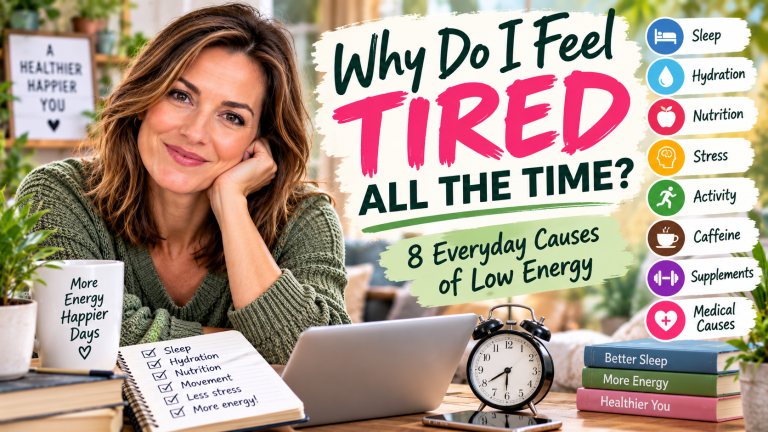
Why Do I Feel Tired Even After 8 Hours of Sleep?

Have you ever gone to bed at a sensible time, slept for eight hours, and still woken up feeling as though you haven’t rested at all?
You’re certainly not alone.
Hi, I’m Emma, and today we’re exploring why getting enough hours of sleep doesn’t always mean waking up refreshed.
Sleep is about more than the number of hours you spend in bed. Quality, consistency, lifestyle habits and underlying health conditions can all influence how rested you feel.
1. Your Sleep Quality May Be Poor
Even when you’re asleep for eight hours, your sleep may be interrupted throughout the night.
Noise, room temperature, stress and breathing difficulties can affect sleep quality.
Try keeping your bedroom dark, quiet and comfortably cool.
2. Your Sleep Schedule Keeps Changing
Your body follows a natural internal clock known as the circadian rhythm.
Going to bed at different times each night can disrupt that rhythm, making mornings more difficult.
Try waking up at approximately the same time each day, including weekends.
3. You’re Drinking Caffeine Too Late
Coffee, tea, energy drinks and some fizzy drinks contain caffeine.
Caffeine can remain active in your body for several hours, potentially affecting sleep even when you don’t notice it.
Consider avoiding caffeine during the six to eight hours before bedtime if you’re sensitive to its effects.
4. Stress Is Affecting Your Rest
Stress can make it difficult to fall asleep or remain asleep.
A racing mind may leave you feeling tired even after spending enough time in bed.
Gentle stretching, reading or practising slow breathing before bedtime may help you unwind.
5. You’re Not Getting Enough Daylight
Natural light helps regulate your body’s sleep-wake cycle.
Spending time outdoors, particularly in the morning, can help reinforce your internal clock.
A short morning walk is a simple way to combine daylight exposure with gentle exercise.
6. Your Lifestyle May Be Affecting Your Energy
Not eating enough, having an unbalanced diet, drinking too little fluid or getting very little physical activity can contribute to fatigue.
Regular meals, sufficient hydration and appropriate daily movement can support general wellbeing.
7. There May Be an Underlying Medical Reason
Persistent tiredness can sometimes be linked to conditions such as anaemia, thyroid problems, depression or sleep apnoea.
If you’re regularly exhausted despite sufficient sleep, speak with a healthcare professional, particularly if you snore loudly, wake up gasping or experience significant daytime sleepiness.
Frequently Asked Questions
Is eight hours of sleep enough for adults?
Most adults need around seven to nine hours each night, although individual needs vary.
Why do I wake up tired every morning?
Possible explanations include poor sleep quality, an inconsistent sleep schedule, stress or an underlying health condition.
Can dehydration make you feel tired?
Yes. Inadequate hydration can contribute to fatigue, particularly when dehydration is more significant.
Emma’s Final Thoughts
Good sleep isn’t just about spending eight hours in bed. It’s about giving your body the conditions it needs to rest and recover.
Start with one small change this week. Perhaps it’s putting your phone away earlier, going for a morning walk or creating a more consistent bedtime routine.
Small, sustainable habits can make a meaningful difference.
Read next: 7 Healthy Morning Habits That Can Improve Your Day.
This article provides general wellness information and is not a substitute for professional medical advice.