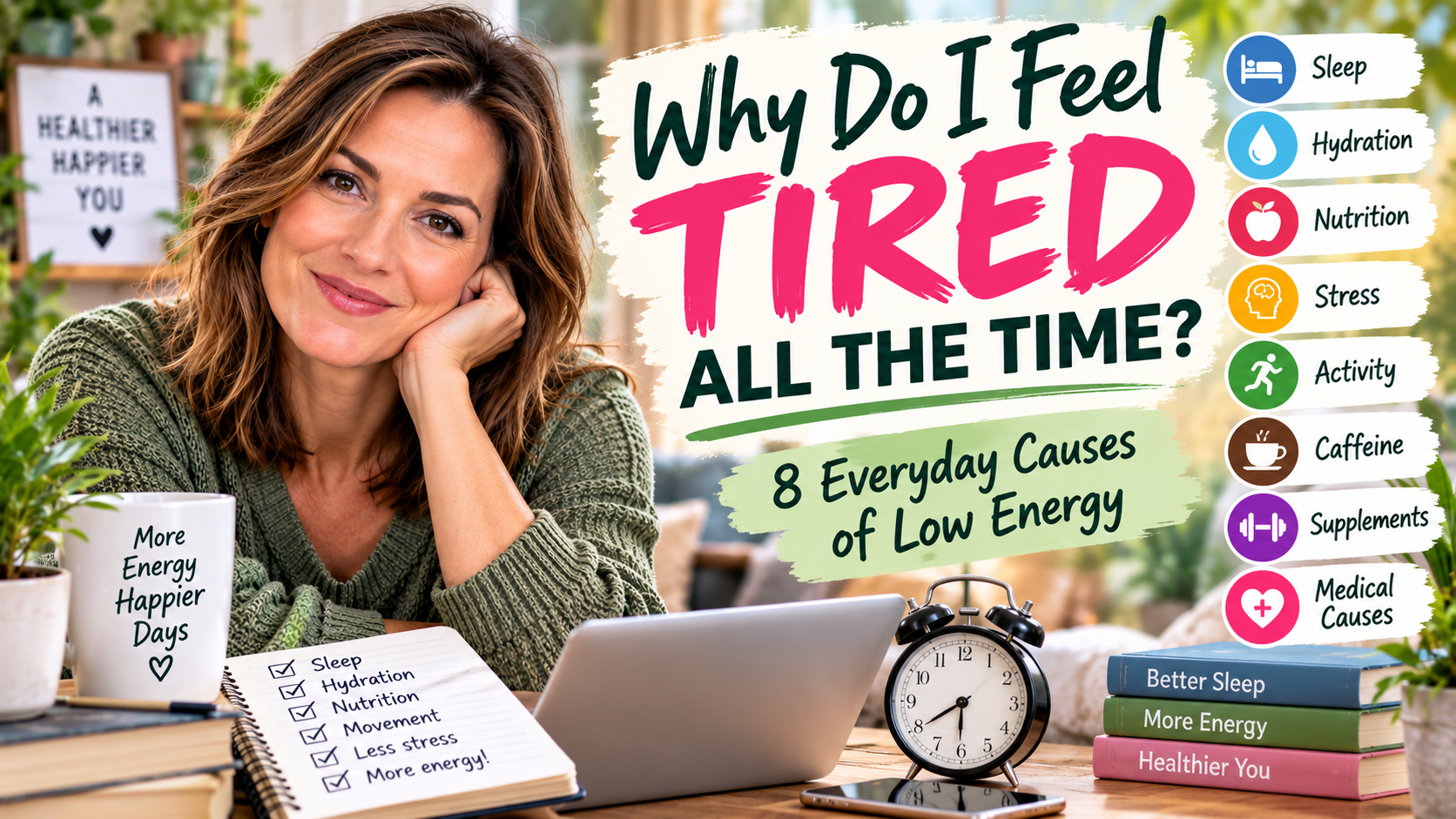
Why Do I Feel Tired All the Time? 8 Everyday Causes

Why Do I Feel Tired All the Time? 8 Everyday Causes of Low Energy
You wake up tired.
You get through the morning, hit an afternoon slump and start wondering whether another coffee is the only thing keeping you functioning.
If that sounds familiar, you’ve probably asked yourself:
“Why do I feel tired all the time?”
There’s no single answer. Everyday tiredness can be influenced by sleep, food, hydration, stress, activity and caffeine habits. Persistent fatigue can also sometimes have a medical cause.
So rather than immediately reaching for another energy drink or supplement, let’s look at some of the basics first.
1. You Might Not Be Getting Enough Sleep
Let’s start with the obvious one.
Adults generally need around 7 to 9 hours of sleep, although individual needs vary.
It’s also possible to spend plenty of time in bed without getting good-quality sleep.
Things such as an inconsistent sleep schedule, noise, alcohol, caffeine, stress and some sleep disorders can interfere with sleep.
If you regularly wake feeling unrefreshed, don’t assume the answer is simply more caffeine.
2. Your Caffeine Habit Could Be Working Against You
Coffee can make you feel more alert, but caffeine doesn’t replace sleep.
There’s also a potential cycle:
Tired → caffeine → difficulty sleeping → tired the next day → more caffeine.
Because caffeine can remain in your body for hours, that afternoon coffee or evening pre-workout may be more relevant to your sleep than you realise.
Read our guide:
How Long Does Caffeine Stay in Your System?
3. You May Not Be Drinking Enough
Hydration is another simple thing that’s easy to overlook.
Dehydration can cause symptoms including thirst, darker urine, dizziness and tiredness.
You may need to pay particular attention to fluids during hot weather, illness or after you’ve been sweating heavily during exercise.
And remember: not every workout automatically requires a brightly coloured sports drink.
For more on hydration during exercise, read:
What Are Electrolytes and Why Does Your Body Need Them?
4. Your Eating Pattern May Need Attention
Your body needs adequate nutrition to function normally.
Long gaps between meals, restrictive diets or simply having an inconsistent eating routine may leave some people feeling less energetic.
Rather than searching for one magical “energy food”, think about your overall eating pattern.
A balanced diet containing a variety of foods is much more important than chasing whichever superfood happens to be trending this week.
And despite what social media occasionally suggests, sprinkling something exotic into a smoothie doesn’t automatically transform your energy levels by lunchtime.
5. Stress Can Be Exhausting
Tiredness isn’t purely physical.
Periods of stress, worry and major life changes can leave people feeling drained.
You might technically have spent eight hours in bed while your brain spent half the night holding an emergency meeting about tomorrow.
Relaxation, regular physical activity, time outdoors and making space for enjoyable activities may help some people manage everyday stress.
If stress, anxiety or low mood is persistent or significantly affecting your life, it’s worth seeking appropriate professional support.
6. You Might Actually Need More Movement
When you’re tired, exercise can sound about as appealing as reorganising the kitchen cupboards at midnight.
But regular physical activity can help support energy and general wellbeing.
You don’t necessarily need a punishing gym session.
Walking, cycling, swimming or another form of movement you actually enjoy can all count.
The important part is finding something realistic enough to become a habit.
7. Your Pre-Workout Isn’t a Substitute for Rest
If you exercise regularly, it’s tempting to use pre-workout whenever you’re feeling sluggish.
A caffeinated pre-workout may make you feel more alert temporarily, but it can’t replace adequate sleep, nutrition or recovery.
Before taking one, ask yourself why you’re tired in the first place.
If you’d like to understand what these supplements actually do, start here:
What Is Pre-Workout and What Does It Do?
And if you’re thinking of using one simply for everyday energy, read:
Can You Take Pre-Workout Without Exercising?
8. Sometimes Tiredness Needs Medical Attention
This is the part that’s particularly important not to overlook.
Persistent or unexplained tiredness isn’t always a lifestyle problem.
There are medical conditions that can cause fatigue, and medicines or treatments can sometimes contribute too.
Rather than trying to diagnose yourself from an article or treating persistent fatigue with supplements, speak with a healthcare professional if you’re concerned.
In particular, seek medical advice if you’ve been tired for several weeks without knowing why, the tiredness is affecting your daily life, or you’re experiencing other concerning symptoms.
🌿 Emma’s Low-Energy Checklist
Before assuming you need an energy supplement, ask yourself:
- ☑ How have I been sleeping?
- ☑ Am I drinking enough?
- ☑ Am I eating regularly and reasonably well?
- ☑ How much caffeine am I consuming?
- ☑ Am I consuming caffeine late in the day?
- ☑ Have I been particularly stressed lately?
- ☑ Am I getting regular movement?
- ☑ Has this tiredness continued for weeks?
Sometimes the answer is hiding in your everyday routine.
And sometimes it isn’t—which is why persistent unexplained fatigue deserves proper medical attention.
Should You Take Supplements for Low Energy?
I’d be careful with the idea that feeling tired automatically means you’re deficient in something.
Supplements can be useful in particular circumstances, but they’re not a universal solution to fatigue.
For example, nutrients such as vitamin B12 and iron are important for normal bodily functions, but that doesn’t mean everybody who feels tired needs to start supplementing them.
If you suspect a deficiency or have persistent symptoms, getting appropriate medical advice is more sensible than guessing.
We’ll explore individual nutrients in future Emma Hart Wellness guides.
What About Energy Drinks?
An energy drink may temporarily make you feel more alert if it contains caffeine.
But again, feeling more awake isn’t necessarily the same thing as addressing why you were tired.
If you’re relying on caffeine repeatedly just to get through an ordinary day, that’s a useful signal to look at your sleep and lifestyle—and, if the problem persists, speak with a healthcare professional.
🔎 Emma Investigates
Energy is one of those areas where marketing can get very clever.
Put words such as “energy”, “performance”, “focus” or “natural” on a colourful tub and it’s easy to assume the product will solve tiredness.
That’s not how we’ll approach products at Emma Hart Wellness.
We’ll ask:
- What’s actually in it?
- How much of each ingredient are you getting?
- Does it contain caffeine?
- What does the evidence say?
- What does the marketing claim?
- Are those two things actually the same?
That’s the approach we’ll use in our upcoming TRUWILD Motion investigation too.
When Should You Speak to a GP?
Feeling tired occasionally is common.
But if you’ve been feeling tired for a few weeks and aren’t sure why, your tiredness is affecting everyday life, or it’s accompanied by other symptoms, contact your GP.
A healthcare professional can look at the bigger picture and decide whether further assessment or tests are appropriate.
Don’t try to cover persistent unexplained fatigue with increasingly large amounts of caffeine or supplements.
The Bottom Line
If you’re wondering “Why do I feel tired all the time?”, start by looking at the fundamentals:
Sleep. Hydration. Food. Movement. Stress. Caffeine.
Sometimes relatively simple changes to everyday habits can make a difference.
But persistent fatigue can also have causes that can’t be diagnosed from a wellness website.
So don’t assume you simply need another coffee, energy drink or supplement.
Sometimes your body may be asking for better habits.
And sometimes it’s asking you to speak to your doctor.
Health disclaimer: This article is for general educational purposes and isn’t medical advice or a diagnosis. Persistent or unexplained fatigue can have many causes. Speak with a qualified healthcare professional if you’re concerned about your symptoms or if tiredness is persistent or affecting your daily life.