What Is Natural Caffeine

What Is Natural Caffeine? Sources, Effects & What to Know
Coffee gets millions of us moving in the morning.
Tea gets plenty of us through the afternoon.
And caffeine now appears in everything from energy drinks to pre-workout powders.
But when you start looking at wellness products, you’ll often see another phrase:
“Natural caffeine.”
It certainly sounds appealing.
But what does natural caffeine actually mean?
And is naturally sourced caffeine fundamentally different from other caffeine?
Let’s make it simple.
What Is Caffeine?
Caffeine is a stimulant that occurs naturally in a number of plants.
When consumed, it acts on the central nervous system and can increase alertness and reduce feelings of tiredness.
That’s why your morning coffee can make you feel more awake.
It’s also why caffeine has become such a popular ingredient in sports and pre-workout products.
Where Does Natural Caffeine Come From?
Caffeine naturally occurs in a number of plants.
Some of the best-known sources include:
Coffee Beans
This is probably the source most people immediately associate with caffeine.
Coffee beans are actually the seeds found inside the fruit of the coffee plant.
The amount of caffeine in a cup of coffee can vary considerably depending on the beans, brewing method, serving size and preparation.
So “one coffee” isn’t a particularly precise measurement of caffeine.
Tea Leaves
Black tea and green tea naturally contain caffeine.
Again, the amount isn’t identical in every cup.
The type of tea, how much is used and how long it’s brewed can all affect caffeine content.
Guarana
Guarana is a plant native to the Amazon region.
Its seeds naturally contain caffeine, which is why guarana extracts sometimes appear in energy products and dietary supplements.
This is one ingredient worth remembering when reading labels.
A product may contain caffeine from plant ingredients even if the front of the packaging doesn’t look like a conventional energy drink.
Yerba Mate
Yerba mate is traditionally consumed as a drink in parts of South America.
Its leaves naturally contain caffeine.
You’ll increasingly see yerba mate used in teas, energy drinks and wellness products.
Cacao
Here’s one people sometimes forget.
Cacao — and therefore chocolate — naturally contains small amounts of caffeine.
Chocolate isn’t usually a major caffeine source compared with coffee, but it illustrates an important point:
Caffeine isn’t only found in coffee and energy drinks.
What Does “Natural Caffeine” Mean?
Generally, when a product talks about natural caffeine, it’s referring to caffeine obtained from naturally caffeine-containing plant sources.
You might therefore see wording such as:
Caffeine from green coffee beans
or
Caffeine from tea
on an ingredient list.
That sounds straightforward.
But there’s an important thing to understand.
Your body doesn’t automatically give naturally sourced caffeine a free pass.
Caffeine is still caffeine.
The source may differ, and a plant extract may contain other compounds, but you should still pay attention to the actual caffeine dose.
That’s more useful than assuming that “natural” means you can consume as much as you like.
Natural Caffeine vs Synthetic Caffeine
This is where marketing can make things sound more dramatic than they really are.
The caffeine molecule itself is the same compound regardless of whether it has been extracted from a natural plant source or manufactured.
That doesn’t mean every caffeinated product is identical.
The product may contain other ingredients.
The caffeine dose may differ.
The way you consume it may differ.
And different drinks or supplements may be absorbed somewhat differently depending on their formulation and what else you’ve consumed.
But don’t assume that naturally sourced caffeine automatically behaves like a completely different stimulant.
When comparing products, I would pay particular attention to:
How much caffeine am I actually consuming?
Why Is Caffeine Used in Pre-Workout Products?
Caffeine is one of the most researched ingredients used in sports supplements.
Research suggests that caffeine can improve certain aspects of exercise performance in some circumstances.
It can also reduce perceived exertion — essentially how difficult exercise feels — for some people.
That helps explain why caffeine appears in so many pre-workout products.
However, individual responses vary.
Someone accustomed to drinking several coffees every day may experience caffeine differently from someone who rarely consumes it.
And not everyone enjoys the effects.
How Much Caffeine Is in Everyday Drinks?
Caffeine amounts vary, sometimes substantially.
As a rough illustration, caffeine can be found in:
- Brewed coffee
- Espresso
- Black tea
- Green tea
- Cola
- Energy drinks
- Chocolate
- Pre-workout supplements
- Certain other dietary supplements
Instead of trying to memorise one number for each drink, I think there’s a better habit:
Check the label whenever possible.
If you’re buying a packaged caffeinated product, look for its caffeine information.
And remember to consider your total caffeine intake from everything you’re consuming that day.
How Much Caffeine Is Too Much?
This is where more isn’t necessarily better.
For healthy adults, the European Food Safety Authority has concluded that habitual caffeine consumption of up to 400 mg per day generally doesn’t raise safety concerns for most healthy adults.
That is not a target you should try to reach.
It’s also not appropriate for everyone.
EFSA also reports that single doses of up to 200 mg generally don’t raise safety concerns for healthy adults.
Pregnant women are advised to limit caffeine intake to 200 mg per day from all sources.
Individual sensitivity varies, and some people experience unwanted effects at considerably lower amounts.
What Happens If You Have Too Much Caffeine?
Too much caffeine can cause unwanted effects.
These may include:
- Feeling jittery
- Restlessness
- Difficulty sleeping
- Increased heart rate
- Headaches
- Anxiety or nervousness
- Digestive discomfort
The amount that produces these effects differs from person to person.
That’s why copying somebody else’s caffeine routine isn’t necessarily a great idea.
Don’t Forget About Sleep
Here’s something particularly relevant if you’re using pre-workout products.
Caffeine can remain in your system for hours.
So if you take a caffeinated pre-workout for an evening gym session, some of that caffeine may still be circulating when you’re trying to sleep.
And there’s a rather unfortunate cycle you don’t want to create:
Tired → consume more caffeine → sleep badly → wake up tired → consume more caffeine.
Caffeine can be useful.
But it doesn’t replace sleep.
Is Natural Caffeine Healthier?
I wouldn’t choose a product purely because the front says “natural caffeine.”
Instead, I’d ask:
Where does the caffeine come from?
How much caffeine does one serving contain?
What else is in the product?
How much caffeine am I already consuming?
What time of day will I be taking it?
Those questions tell you far more than the word “natural.”
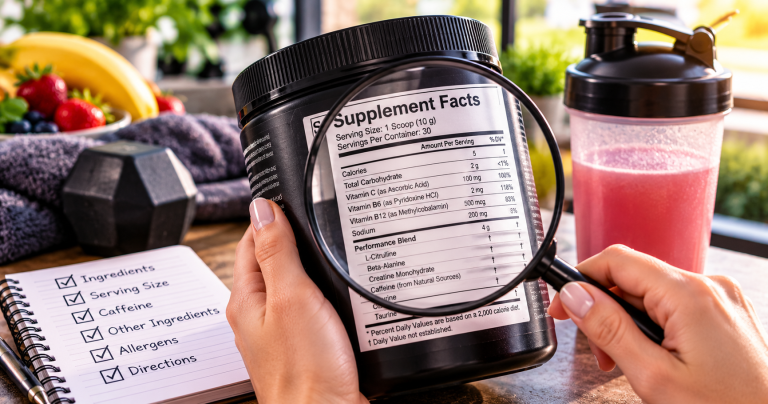
What Should You Look for on a Supplement Label?
If you’re considering an energy or pre-workout supplement containing caffeine, check:
Caffeine Per Serving
Don’t just look for caffeine in the ingredient list.
Find out how much you’re actually getting.
Serving Size
Does one serving mean one scoop or two?
This can dramatically change the amount of caffeine you consume.
Other Caffeine Sources
Look for ingredients such as coffee extracts, guarana, tea extracts and yerba mate.
Directions and Warnings
Pay attention to the manufacturer’s recommended use and any warnings.
If you haven’t already, read my guide:
How to Read a Supplement Label: 10 Things to Check Before You Buy
It will make comparing products considerably easier.
Emma Investigates: Natural Caffeine in Pre-Workout
This subject will become particularly useful when we investigate pre-workout products.
One of the first products we’ll examine is TRUWILD Motion.
Rather than simply focusing on the words printed across the front of the packaging, we’ll look at the actual formula and ask:
Where does its caffeine come from?
How much caffeine does a serving contain?
What else does it contain?
How is the manufacturer positioning the product?
And importantly:
What should you know before deciding whether it’s right for you?
That’s the approach we’ll use throughout Emma Investigates.
Frequently Asked Questions
Is natural caffeine still caffeine?
Yes. Caffeine derived from naturally caffeine-containing plants is still caffeine. The source may differ, but you should still consider how much caffeine you’re consuming.
Does green tea contain caffeine?
Yes. Green tea naturally contains caffeine, although the amount varies depending on the tea and how it’s prepared.
Does chocolate contain caffeine?
Yes. Cacao naturally contains caffeine, so chocolate can contain caffeine, although generally much less than a typical cup of coffee.
Is guarana a source of caffeine?
Yes. Guarana seeds naturally contain caffeine and guarana extracts are sometimes used in energy drinks and supplements.
Can caffeine affect sleep?
Yes. Caffeine consumed later in the day can interfere with sleep in some people. Individual sensitivity and the amount consumed both matter.
The Bottom Line
Natural caffeine isn’t a mysterious new form of energy.
It’s caffeine derived from naturally caffeine-containing sources such as coffee, tea, guarana and yerba mate.
Those sources can be interesting, but don’t let the word “natural” distract you from the most important information:
How much caffeine are you actually consuming?
Read the label.
Check the serving size.
Consider your other caffeine sources.
And think about when you’re consuming it.
Sometimes understanding one ingredient properly tells you far more about a product than all the marketing on the front of the package.
Important Information
This article is for general educational and informational purposes and isn’t medical advice. Caffeine isn’t suitable for everyone and individual sensitivity varies. If you’re pregnant, breastfeeding, taking medication, have a medical condition or have concerns about caffeine consumption, seek advice from an appropriately qualified healthcare professional.